
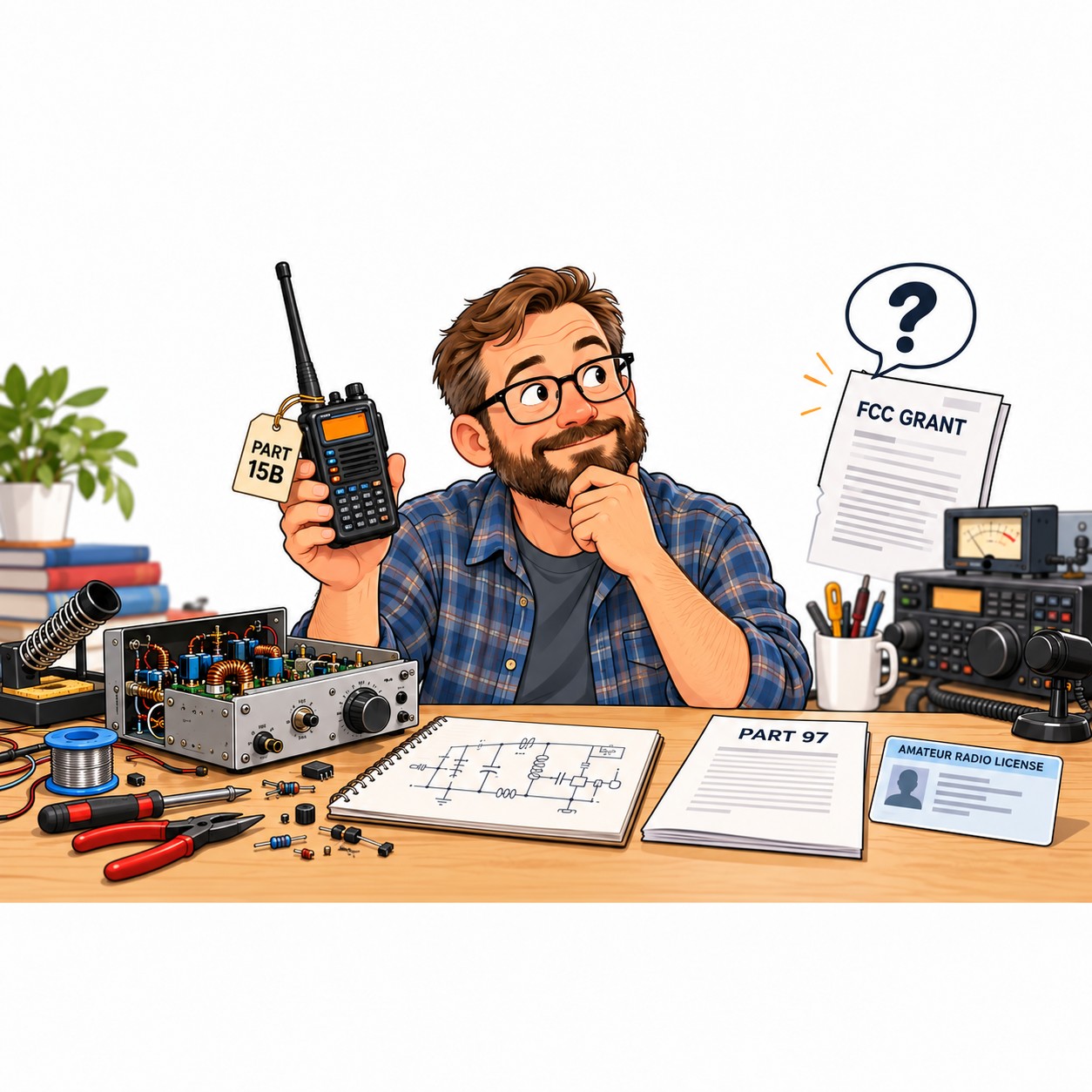
 If you look up the FCC ID on an amateur radio, you may find a grant that lists Part 15B but says nothing about Part 97. That can seem strange. The radio transmits, and Part 15B does not authorize its amateur transmissions. Check the sticker on the back of the radio and there is no FCC ID for it, either. So where is its Part 97 approval?
The short answer? There isn’t one. Why?
Part 97 is the section of the FCC rules that governs the Amateur Radio Service, but amateur transceivers generally do not need FCC equipment certification for their transmitters. This is different from services such as CB, FRS or GMRS, where the rules require one.
The reason is surprisingly simple. Amateur radio is a hobby service, and as such, has long allowed licensed operators to build, modify and experiment with their own equipment. Requiring every transmitter to receive an individual equipment grant would be at odds with that practice.
It gets better. A licensed ham can even use a radio originally made for another service on amateur frequencies, provided the station’s operation complies with the amateur rules. The absence of a Part 97 entry on an FCC grant does not mean the radio cannot be used on the ham bands.
Of course, this doesn't mean amateur transmissions are exempt from technical rules. On the contrary, Part 97 specifies the frequencies, emissions and operating limits that an amateur station must follow. The control operator is responsible for the station’s transmissions, including keeping unwanted emissions within the applicable limits. An FCC ID alone does not establish that every possible setting or modification of a radio meets those requirements.
So what does Part 15B certification mean on the grant? Part 15B concerns unintentional radio frequency emissions from equipment such as receivers and digital circuitry. An amateur transceiver may have a Part 15B authorization for those functions, even though its amateur transmitter doesn't require a separate Part 97 equipment grant to operate. The point is, Part 15B does not authorize transmission on the amateur bands. The authority to operate an amateur station comes from the operator’s license and compliance with Part 97.
There are limits to this distinction. An amateur label does not provide a general exemption for a radio designed or intended to transmit on non-amateur frequencies. Those other radio services have their own equipment and operating rules. Part 97 also has a specific certification requirement for certain external RF power amplifiers. The general exemption for amateur transceivers should not be read as an exemption for everything connected to a ham station.
This is why an amateur radio may show Part 15B without a Part 97 transmitter grant. It's how amateur radio equipment is handled in the United States. If the radio is being submitted for approval in another country, however, the FCC listing does not determine that country’s requirements, as it has no jurisdiction outside the US. The owner or a radio who resides and operates in another country will need to check what their governing body requires for amateur transmitting equipment before purchase or use.
