Updated May 29, 2025
 With all of the unpredictable weather we have been experiencing lately, we have been receiving an uptick in interest in our weather radios. We thought it might be helpful to put together a quick guide to make it a little easier for those shopping for their first weather radio.
What Is A Weather Radio?
The National Oceanic and Atmospheric Administration (NOAA) is a federal agency that, among other things, is tasked with monitoring the weather (through the National Weather Service). NOAA has transmitting stations spread throughout the United States that constantly broadcast the current weather conditions for the surrounding area. Each station transmits a message on one of seven VHF frequencies (162.400, 162.425, 162.450, 162.475, 162.500, 162.525, and 162.550). A looped recording is constantly played over these frequencies describing the current weather.
A basic weather radio allows you to tune into these frequencies and instantly hear a weather report at any time. Very simple models are super easy to use, only requiring that you choose your local channel and press a button to start listening. Choosing a channel is often as simple as scrolling through stations 1-7 and listening for the one that is the clearest, but NOAA has a page on their web site that will allow you to find the station that is designated for your area.
While a basic weather radio can be useful, a more advanced radio is really recommended.
Proactive Alerts
More advanced weather radios take things a step further, proactively alerting you when an emergency or dangerous weather situation occurs. When an emergency arises, a special tone is transmitted by the NOAA stations. Many weather radios can constantly monitor for these tones and turn themselves on when the tone is heard. This is critical, as it allows your weather radio to now alert you proactively to an emergency.
One drawback of the weather radios that proactively alert is that a NOAA transmitting station covers a very large area, and you may find yourself being alerted to events that do not necessarily apply to your city or county. If this happens enough, you may find yourself paying less attention to the radio when it sounds an alert. The most advanced weather radios support "Specific Area Message Encoding," or SAME, which solves this problem. Weather radios using SAME technology allow you to enter a code that will focus the alerts on roughly a zip code sized area, ensuring that only warnings in your designated area will be alerted to you.
Who Needs A Weather Radio?
As a retailer, it is a little cliché to say that everyone needs our product. In the case of a weather radio, however, I offer no apologies. Year after year we see news stories about people who die in emergencies in which they just didn't have time to get to safety. Weather radios save lives year after year by waking people in the middle of the night or providing enough warning time for them to get to shelter. This is a product that sells for a range of $20-$60 that could make the all the difference in the world when an emergency occurs, so there is really no reason not to have one.
Fortunately, it seems like weather radios are catching on in a big way. Local news channels have gotten the word out about the importance of having one and we see many businesses purchasing them to help keep their employees safe. Weather radios are also in use by almost all of the schools in the nation now, with the Midland WR-120 being the most popular model.
What Is The Best Weather Radio?
As with most products, the best weather radio really depends upon how you plan to use it and even how much you want to spend. Here I'll outline a few of our best sellers and give the pros and cons of each.
Midland WR-120 Weather Radio - The Midland WR-120 is possibly the most popular weather radio in the world. It is a full featured desktop weather radio, supporting SAME technology and even allowing for the connection of (optional) external accessories such as a strobe light or antenna.
Midland WR-400 Weather Radio - More advanced than the WR-120, the WR-400 also includes features such as an AM/FM radio, alarm clock, selectable alert settings, and color coded alert lights.
Midland ER310 Emergency Hand Crank Weather Radio with Flashlight - This is a full featured portable combo weather radio and flashlight with multiple power options, AM/FM radio, SOS signaling in Morse Code, a built-in USB charging port and even a dog whistle to alert rescue animals.
Midland EX37VP Two Way Radio Emergency Kit - This is more of an all-around emergency kit than simply a weather radio. It includes two license-free FRS two way radios, 9 LED emergency flashlight, a multi-function emergency whistle with built-in compass, temperature gauge and magnifier. They are all neatly organized in softshell case that's compact, durable and lightweight. Each radio has a built-in USB charging port and can be powered with the included rechargeable batteries or 3 AAA alkaline batteries. It would be nice to have during a power outage or on a camping trip. Does not support SAME.
Midland ER40 Emergency Crank Weather Alert Radio w/ Flashlight - This is a very small and inexpensive hand held All Hazards Alert radio. Does not support SAME.
Midland ER10VP Emergency Weather Radio - This is a very small and inexpensive hand held weather alert radio with a flashlight that flashes SOS in Morse Code. Does not support SAME.
Weather Radio Accessory
Midland 18-259W Weather Antenna - This antenna is will help if you are in an area or in a building where it is difficult to receive a strong signal. Great for cars, vans, homes, boats, RVs, and is specially designed to use for steel buildings and manufactured homes with metallic siding or construction.
Whether you live in a region with unpredictable weather or you just want to be prepared in an emergency situation, we here at www.BuyTwoWayRadios.com have the tools to keep you and your loved ones safe and prepared. If you have any questions about anything, please feel free to contact our sales staff at 1-800-584-1445!
Related Products
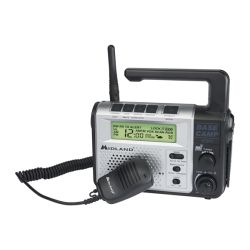
-Public alert/all hazards
-SAME
-Alert sounds and then NOAA ch comes on, with some notification of the end of alert
-selectable alerts eg tornado vs Frost and warning vs watch
Nice extras:
-Selectable tone vs voice
- aux out for external speaker
- aux antennae out
went silent in storm